 Fitness Trak™
How To Track Workouts For The Whole Family On One Phone
In a lot of homes, fitness is a group project. One person lifts, another runs, someone else is doing knee exercises from a physical therapist. Maybe you train together at the same gym. Then the questions start. Whose bench was 135? Who ran Saturday? Is that 20 kilograms or 20 pounds?
This guide covers how to keep everyone's training separate and accurate, how to set goals that fit each person, and what to look for in a tool that works for a whole home.
Why shared tracking goes wrong
The most common setup is one notebook or one app account for two people. It falls apart fast.
- Numbers get mixed. Your partner's sets end up in your history, and your progress chart stops making sense.
- Units clash. One person thinks in pounds, the other in kilograms.
- Goals differ. A marathon runner and a beginner lifter need different weekly targets.
- Records lose meaning. A personal record only counts if it was your set.
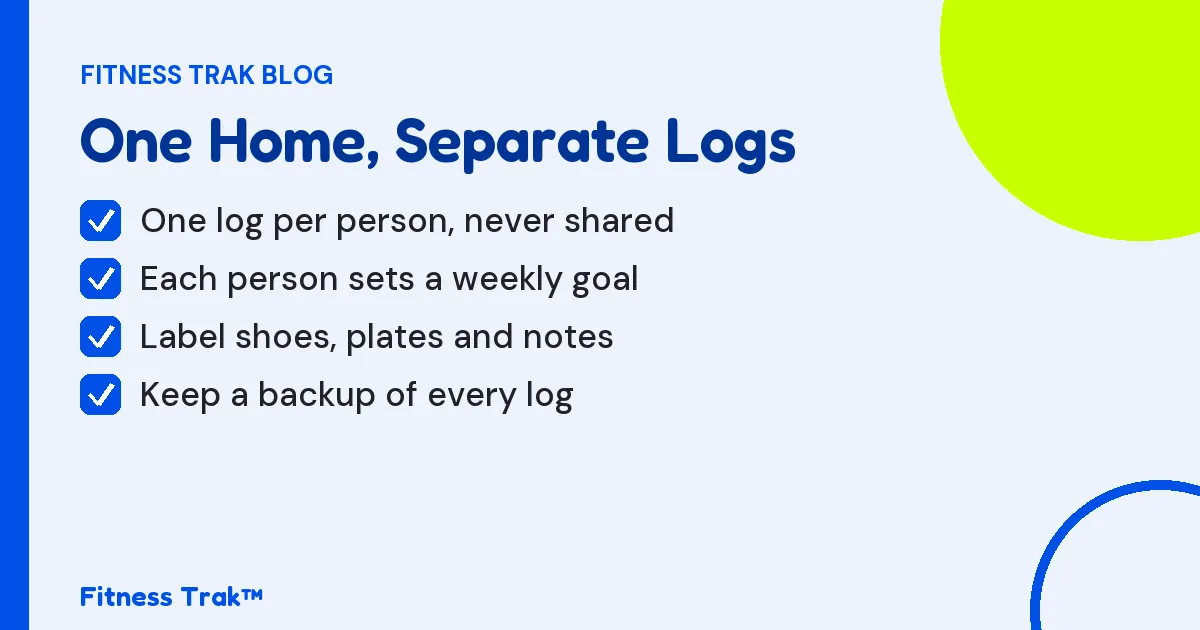
The fix is simple. Every person gets their own log, even if you share the phone, the gym and the workout.
Set the right goal for each person
The CDC's physical activity guidelines give a useful baseline for adults. They recommend at least 150 minutes of moderate-intensity aerobic activity a week, or 75 minutes of vigorous activity, or a mix. They also recommend muscle-strengthening activity on at least 2 days a week that works the legs, hips, back, abdomen, chest, shoulders and arms.
Within that, each person's goal can look different:
- A new lifter might aim for 2 or 3 strength sessions a week.
- A runner might count runs or miles.
- Someone in rehab follows the plan their physical therapist set, and nothing more.
A weekly goal is often easier to keep than a daily one. A week can absorb a busy Tuesday. A daily streak breaks the first time someone gets sick. Rest days are part of training, so a good tracker should never punish them.
Training together without mixing logs
If you lift together, take turns on the same equipment and log as you go. A few habits help:
- Log right after your own set, before your partner starts theirs.
- Say the numbers out loud. "135 for 8" is easy to remember for the few seconds it takes to log.
- Use the same exercise names, so you can compare later if you want to.
- Keep your own units. Converting in your head between sets causes mistakes.
If you run together, each person logs their own run. Your distance may match, but your shoes, effort and notes are your own. Our guide on tracking running shoe mileage shows why separate shoe totals matter.
Keep rehab separate from training
When one person in the home is recovering from an injury, their log needs extra care. Their physical therapist's plan, pain ratings and progress belong to them and their provider. Keep their rehab entries in their own profile. Don't let someone else's heavy day become a target they feel they have to match. See how to track physical therapy exercises at home for the details. As always, ask a doctor or physical therapist before changing a rehab plan.
Privacy At Home
Training data can be personal. Body weight, measurements, progress photos and injury notes are things many people don't want shown to everyone at home. A good setup at home keeps each person's data in their own profile. Agree as a family on what is shared, like a weekly total, and what stays private.
The money side of a busy home
Many fitness apps charge each person separately, and some charge more for a family plan. Gyms, class packs and races add their own costs and deadlines. A home that tracks them in one place is less likely to miss a cancel-by date or a refund window. Write down:
- Each gym membership's renewal and cancel-by date
- Class packs and when the credits expire
- Race entry fees and refund deadlines
What to look for in a family workout tracker
- A separate profile and log for each person
- Each person's own units and weekly goal
- Lifting, cardio, classes and rehab in one place, since a family trains in different ways
- Private data that stays with each person
- A way to export or back up every log
Fitness Trak was made for this. Each person in your home gets their own profile on the phone, with their own log, weekly goal and PRs, under one purchase. Profiles stay on that phone; sync between phones is coming soon. The week streak keeps rest days safe. It logs lifts, 44 cardio types, classes, races and your provider's home exercises in one app, and it keeps gym cancel-by dates, class packs and race refund deadlines too. See everything it tracks. Fitness Trak is coming soon to the App Store and Google Play.
Getting everyone started
- Give each person a profile or a page of their own.
- Have each person pick one weekly goal.
- Log the first week without judging the numbers.
- Look at the week together on Sunday, if everyone wants to.
For what each entry should include, see what to write in a workout log.
Frequently asked questions
Can two people share one workout log?
They can share one notebook or one phone, but each person should have a separate log inside it. Mixing two people's sets in one history makes progress charts and personal records meaningless.
How much exercise should adults in my home aim for?
The CDC recommends that adults get at least 150 minutes of moderate-intensity aerobic activity a week, or 75 minutes of vigorous activity, plus muscle-strengthening activity on at least 2 days a week. Anyone with a health condition should ask their doctor what fits them.
Should my partner and I follow the same program?
You can train at the same time and do similar exercises, but your weights, reps and progress will differ. Log your own numbers and set your own goals so each of you progresses at your own pace.
Is it safe to share body weight and progress photos with family?
That is each person's choice. Keep that data in each person's own profile and agree as a family on what, if anything, gets shared.
Sources
- CDC, Physical Activity Guidelines for Adults
- American College of Sports Medicine position stand. Progression models in resistance training for healthy adults (PubMed)